
AC Repair vs. Replacement in Southwest Kansas: How to Make the Right Call
June 29, 2026
It is the third week of July, the air outside sits near one hundred, and your house will not drop below eighty no matter where you set the thermostat. You can hear the unit running and feel air moving. It just is not cold air, and the cycle that should have shut off twenty minutes ago is still going. If you are standing in front of a warm vent wondering whether this is a quick fix or the start of a much bigger conversation, you are asking the right question at the right time.
Here is the short version before we get into the weeds. A repair makes sense when your system is still reasonably young and the failure is a single, isolated part. Replacement starts to win when the unit is past its tenth summer, when breakdowns stack up two or three a season, or when it leans on a refrigerant that is getting harder to find. Most of the time you can tell which way you are leaning before anyone opens the access panel. The rest walks you through how to read those signs.
When a Repair Is Still the Right Call
Repair is usually the smart move when your system is under ten years old and the trouble traces back to one failed component. A capacitor, a contactor, a blower motor, or a clogged condensate line can each bring cooling to a halt without meaning the unit itself is finished. These parts wear out on a normal schedule, especially after a stretch of one hundred degree afternoons that keep the system running fourteen hours a day.
The clearest sign you are in repair territory is a single, clean symptom. The unit was fine last week, one thing failed, and everything else still works. A swollen capacitor that has quit is a thirty minute fix. A frozen coil clears once airflow is restored. When the bones of the system are healthy and one part gives out, a repair keeps a serviceable unit running for several more seasons.
When Replacement Is the Smarter Move
Replacement starts to make sense once you are paying for the same system twice in one summer. When a compressor fails, when a refrigerant leak keeps returning, or when you are booking a third visit in a single season, you are no longer fixing a unit. You are funding its retirement one part at a time. A compressor failure on an older system is the classic tipping point, since it is the priciest component and rarely the only tired part left.
The other quiet signal is your energy bill. An aging system loses efficiency every year, and out here where the AC runs hard from June through September, that drift shows up fast. A newer high efficiency system cools the same house while drawing noticeably less power, so replacement often pays you back rather than draining you.
Why Year Ten Tips the Scale
Age is the single most useful number in this decision. Most central systems run well for ten to fifteen years, and the back half of that range is where the math changes. After about year ten, parts tend to wear in clusters rather than one at a time, because everything inside aged under the same load and the same heat. Fix one component and the next is often only months behind.
There is a second age trap. Systems built before roughly 2010 often run on a refrigerant that is no longer produced and grows scarcer every year. If a unit like that develops a leak, topping it off is getting harder and far less practical than it once was. When an older system on hard to source refrigerant springs a leak, that single fact often settles the decision on its own.
How Southwest Kansas Summers Change the Math
Out here, local conditions push systems harder than the national average, which shortens the window where repair makes sense. Summer afternoons regularly climb past one hundred, and a unit that runs that long that often ages faster than the same model would in a milder climate. A system that might reach fifteen years on the coast often shows its age closer to twelve on the High Plains.
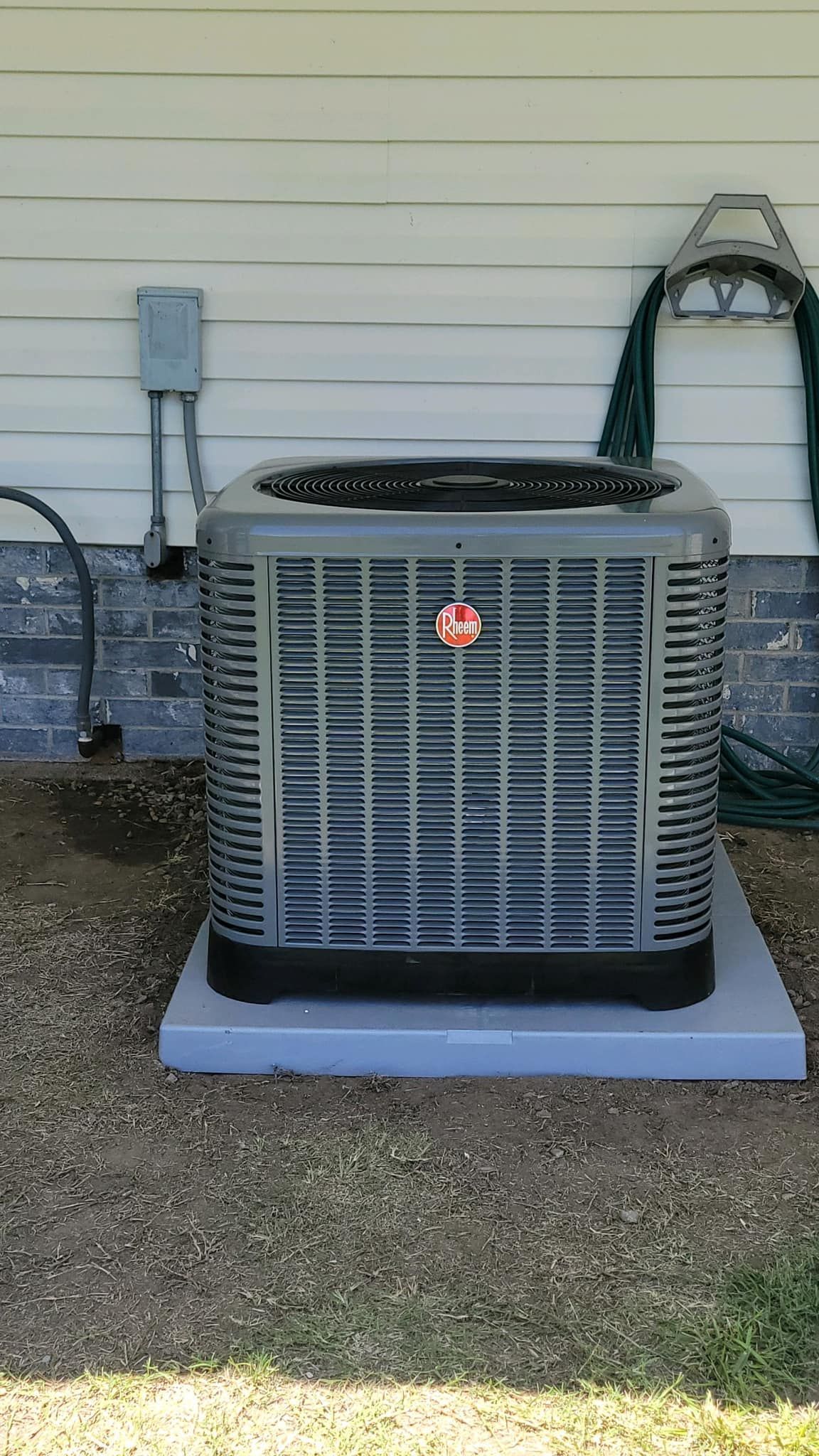
Then there is the dust. The condenser outside pulls air across its coils all day, and our blowing soil, crop dust, and cottonwood seed pack into those fins fast. A coil choked with grit cannot shed heat, so the whole system works harder and runs hotter. We see this constantly, a unit that seems to be failing but is really suffocating under a season of caked on dust. Wind driven hail is the other regional factor, since one hard storm can flatten condenser fins on an otherwise healthy unit.
Read the Signs at a Glance
Use this as a quick gut check before anyone pulls a panel.
| What You Are Noticing | What It Usually Means | Lean Toward |
|---|---|---|
| Warm air, unit under 8 years old | Single failed part, often a capacitor | Repair |
| Same problem fixed twice in one summer | Underlying failure masking itself | Replace |
| Loud grinding or metal on metal | Failing compressor or motor bearing | Replace if older |
| Ice on the lines or coil | Airflow restriction or dirty filter | Repair |
| Energy bills climbing every summer | Efficiency loss from age | Consider replace |
| Unit is 12 plus years old, major part failed | Cluster wear past its lifespan | Replace |
| Weak airflow, otherwise cooling fine | Blower or duct issue | Repair |
| Frequent short cycling | Sizing, sensor, or refrigerant issue | Diagnose first |
| Leak that returns after a recharge | Failing coil on older refrigerant | Replace if older |
| Outdoor coil packed with dust | Restricted heat exchange | Repair, then maintain |
How We Make the Call on a Service Visit
When we arrive, we work a fixed sequence instead of guessing. First we check the four most common failures, the filter, capacitor, contactor, and condensate line, since these account for a large share of summer no cool calls. Next we measure refrigerant pressures and the temperature split across the coil to confirm the system is actually moving heat. Only then do we look at the expensive components, the compressor and the coil, because clearing the simple fixes first keeps you from replacing a whole unit that needed one small part.
We also pull the panel and inspect the condenser coil every time, because out here a dust packed coil mimics a dying system closely enough to fool most homeowners. On service calls we frequently find a unit written off as dead that only needed a deep coil cleaning and a fresh filter. Honest answer: sometimes a repair holds for years and sometimes it hides a bigger failure one part behind. Reading pressures, age, and repair history together is how we tell.
Keeping Either Choice Running Longer
Whether you repair or replace, a few habits buy you years out here. Change your filter monthly through peak summer, not every ninety days, because High Plains dust loads it far faster than average. Once a year, rinse the outdoor coil with a gentle hose stream to clear packed soil. Keep grass and weeds at least two feet clear of the condenser so it can breathe. These three habits prevent the airflow problems behind a real share of the no cool calls we run every July.
Frequently Asked Questions
How long does a typical AC system last in Southwest Kansas?
Out here, plan on ten to twelve years rather than the fifteen you might see in milder regions. Our long, hot summers and constant dust load the system harder, so even a well maintained unit ages a little faster than average.
Is it safe to keep running my AC while it struggles?
Stop running it if you smell burning, hear grinding metal, or see the breaker tripping repeatedly. Those point to an electrical or mechanical hazard that worsens fast. Short cycling or weak cooling is safe to run briefly, but have it checked soon.
Will a new system really lower my summer energy bills?
Yes, noticeably. A modern high efficiency unit cools the same house while pulling less power, and since the AC runs from June into September here, that gap adds up quickly across one summer. Older systems lose efficiency every year they age.
How fast does dust actually clog an outdoor unit here?
Faster than most homeowners expect. After one windy season, our blowing soil and crop dust can pack a condenser coil enough to choke airflow. We often find units written off as failing that simply needed a thorough coil cleaning and a fresh filter.
Should I replace both the indoor and outdoor units together?
Usually, yes. Pairing a new outdoor unit with an old indoor coil creates a mismatch that drags down efficiency and can shorten the new part's life. Replacing both lets the system perform as designed and protects the investment you just made.
Skilled Hands Keeping Southwest Kansas Homes Cool Longer
The whole decision comes down to one principle: weigh the age of your system, the pattern of its breakdowns, and the local load it carries before you commit to another repair. Out here that math tilts faster than most places, because High Plains heat, blowing dust, and wind driven storms wear systems harder and expose an aging unit sooner than a milder climate would. If you are weighing AC repair versus replacement and want a straight answer instead of a sales pitch, reach out to 4 Seasons Heating and Air. With 7 years of experience keeping homes cool across Hugoton, Kansas, and the surrounding Southwest Kansas communities, we will tell you honestly which call fits your home and your budget. Get on our schedule before the next hundred-degree stretch arrives.